
Home ECG Monitoring: Bringing heart rhythm checks into everyday life
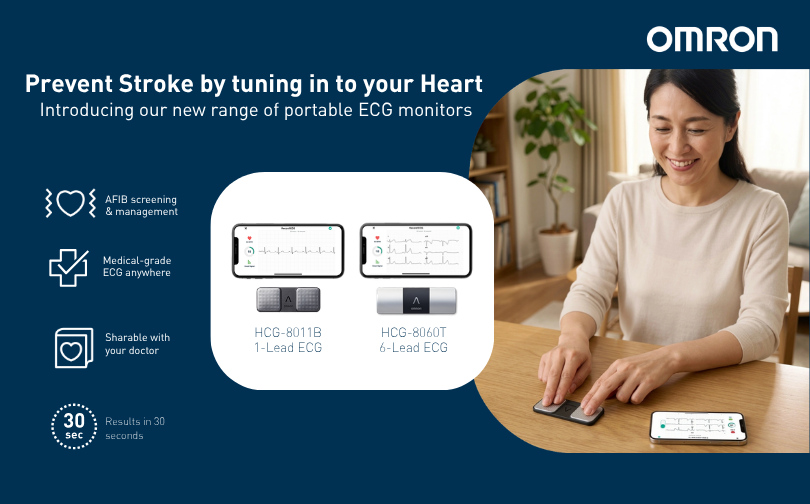
Home blood pressure monitoring has become a routine part of managing cardiovascular health. Today, advances in technology have made it possible to complement blood pressure monitoring with clinically validated electrocardiogram (ECG) recordings from the comfort of home, enabling you to take a more proactive approach to monitoring your heart rhythm and detecting heart rhythm abnormalities such as atrial fibrillation (AFib). [3,4]
Why Heart Rhythm Monitoring Matters
Your heart normally beats in a regular rhythm. However, irregular heart rhythms, known as arrhythmias, can occur and may cause symptoms such as palpitations, dizziness, fatigue, shortness of breath, or sometimes no symptoms at all. [1,2]
One of the most common arrhythmias is Atrial Fibrillation (AFib), a condition where the upper chambers of the heart beat irregularly and often rapidly. AFib is associated with a five-fold increased risk of stroke and may also contribute to heart failure and other cardiovascular complications if left unmanaged. [1,2]
The challenge is that AFib and other arrhythmias can occur intermittently. Symptoms may appear briefly and disappear before a clinic appointment, making them difficult to detect. Some may not experience any symptoms at all. [1,2,3]
From Clinic to Home
Traditionally, ECGs could only be performed in healthcare settings using equipment connected with multiple wires and electrodes. While highly effective, these tests provide only a snapshot of the heart’s rhythm at a specific moment.
Home ECG monitoring bridges this gap by allowing you to record an ECG whenever symptoms occur.
Clinically Validated Home ECG Solutions
Today, home ECG devices are designed to be simple and convenient. You can record a medical-grade ECG without wires, adhesive patches or complicated setup, making it easier to capture intermittent symptoms whenever they occur. [4,5] Among these solutions, OMRON offers a portfolio of clinically validated home ECG solutions designed to meet different monitoring needs:
⦁ OMRON Complete combines blood pressure monitoring and ECG recording in a single device, allowing you to assess two important cardiovascular indicators at the same time.
⦁ OMRON 1-Lead ECG Monitor (HCG-8011B) provides a quick and convenient way to capture heart rhythm recordings whenever symptoms occur.
⦁ OMRON 6-Lead ECG Monitor (HCG-8060T) offers a more comprehensive six-lead view to support detailed heart rhythm assessment.
By bringing clinically validated ECG technology into your home, it can help you capture important heart rhythm information when it matters most and support more informed clinical discussions between visits.

| Product | Best For | Key Benefit |
| OMRON Complete | Blood pressure and ECG monitoring | Measure both BP and ECG in one device |
| HCG-8011B 1-lead ECG | Convenient everyday check for individuals who experience occasional symptoms such as palpitations, dizziness or irregular heartbeat | Fast and simple medical-grade ECG recording in 30 seconds |
| HCG-8060T 6-lead ECG | Individuals requiring more comprehensive monitoring, including those on ongoing monitoring, follow up care, or managing known heart conditions | Multi-lead ECG for detailed heart rhythm insight in 30 seconds |

Who May Benefit?
Home ECG monitoring may be useful for:
• Individuals experiencing occasional palpitations or irregular heartbeats
• People with a history of AFib or other arrhythmias
• Individuals with hypertension, diabetes or other cardiovascular risk factors
• Stroke survivors requiring rhythm monitoring
• Adults who wish to take a more proactive approach to heart health [1,2]
If you are already monitoring your blood pressure at home, adding ECG monitoring provides a more complete picture of cardiovascular health. While blood pressure monitoring measures the force of blood against the artery walls, ECG monitoring evaluates the heart's electrical activity. Together, these complementary measurements can support earlier detection of potential cardiovascular abnormalities and more informed discussions with your healthcare professionals.
It is important to note that home ECG monitoring is intended to complement, not replace, professional medical evaluation. While it provides valuable additional information between clinic visits, your healthcare professional remains best placed to interpret the findings, establish a diagnosis and recommend the most appropriate treatment. [1,2]
References
[1] Hindricks G, Potpara T, Dagres N, et al. 2020 ESC Guidelines for the diagnosis and management of atrial fibrillation.
[2] January CT, Wann LS, Calkins H, et al. 2019 AHA/ACC/HRS Focused Update of the Atrial Fibrillation Guideline.
[3] Lowres N, Neubeck L, Redfern J, Freedman SB. Screening to identify unknown atrial fibrillation.
[4] Desteghe L, Raymaekers Z, Lutin M, et al. Performance of handheld electrocardiogram devices to detect atrial fibrillation.
[5] Halcox JPJ, Wareham K, Cardew A, et al. Assessment of remote heart rhythm sampling using the AliveCor Heart Monitor to screen for atrial fibrillation.
[6] Koshy AN, Sajeev JK, Nerlekar N, et al. Smart devices for atrial fibrillation detection: A systematic review.


